
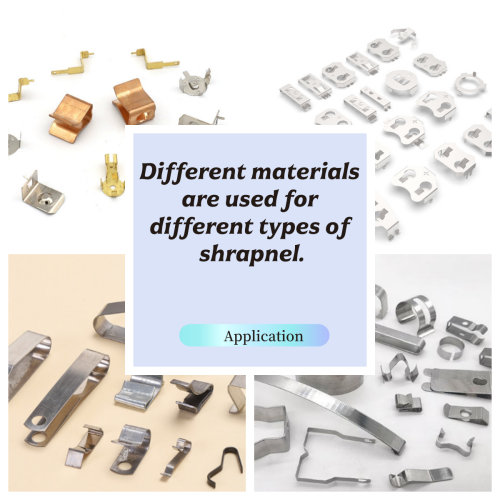
五金冲压弹片选材指南:精准匹配需求,筑牢产品性能根基
Hardware Stamping Spring Material Selection Guide: Precisely Match Requirements to Build a Solid Foundation for Product Performance
五金冲压弹片作为各类设备、电子器件中的核心基础部件,其性能直接决定产品的稳定性、使用寿命与安全可靠性。而选材,正是决定弹片性能的关键第一步。不同工况、不同需求下,如何精准挑选适配的材料?本文整理系统化选材技巧,助力企业规避选型误区,实现性能与成本的最优平衡。
As a core basic component in various equipment and electronic devices, the performance of hardware stamping springs directly determines the stability, service life and safety reliability of products. Material selection is the crucial first step in determining spring performance. How to accurately select suitable materials under different working conditions and requirements? This article collates systematic material selection skills to help enterprises avoid selection misunderstandings and achieve the optimal balance between performance and cost.
一、先明需求:锁定核心工况与性能目标 / I. Clarify Requirements First: Lock in Core Working Conditions and Performance Goals
选材前需先明确弹片的核心应用需求与工作工况,避免盲目选型。重点关注以下5个维度:
Before material selection, it is necessary to clarify the core application requirements and working conditions of the spring to avoid blind selection. Focus on the following 5 dimensions:
弹性与疲劳需求 / Elasticity and Fatigue Requirements:若用于高频回弹、重载场景(如高频按键、机械触点),需优先选择高弹性极限、抗疲劳性能优异的材料;低频轻载场景(如简易卡扣)可适当降低材料性能要求,控制成本。If used in high-frequency rebound and heavy-load scenarios (such as high-frequency buttons, mechanical contacts), materials with high elastic limit and excellent fatigue resistance should be preferred; for low-frequency and light-load scenarios (such as simple buckles), material performance requirements can be appropriately reduced to control costs.
导电/导热要求 / Conductivity/Thermal Conductivity Requirements:电子类弹片(如电池座、信号连接器)需具备高导电性能,部分散热类弹片则对导热性有明确要求;非导电场景可忽略此维度。Electronic springs (such as battery holders, signal connectors) need to have high conductivity, and some heat-dissipating springs have clear requirements for thermal conductivity; this dimension can be ignored in non-conductive scenarios.
耐蚀与环境适配 / Corrosion Resistance and Environmental Adaptability:若应用于潮湿环境、户外场景或酸碱介质中,需选择耐腐蚀性强的材料;干燥室内环境对耐蚀性要求可降低。If used in humid environments, outdoor scenarios or acid-base media, materials with strong corrosion resistance should be selected; the corrosion resistance requirement can be reduced in dry indoor environments.
尺寸与精度标准 / Size and Precision Standards:精密冲压弹片(如微型电子元件)需选择塑性好、回弹率低的材料,确保冲压后尺寸公差符合要求;普通工装弹片对精度要求较低。Precision stamping springs (such as microelectronic components) need to select materials with good plasticity and low springback rate to ensure that the dimensional tolerance after stamping meets the requirements; ordinary tooling springs have lower precision requirements.
成本与量产需求 / Cost and Mass Production Requirements:批量生产需优先选择易采购、加工难度低、性价比高的材料;小批量定制可根据性能需求灵活选择特种材料。For mass production, materials that are easy to purchase, low in processing difficulty and high in cost performance should be preferred; for small-batch customization, special materials can be flexibly selected according to performance requirements.
二、常用材料特性与应用场景对照表 / II. Comparison Table of Characteristics and Application Scenarios of Common Materials
不同材料的弹性、耐蚀、导电等性能差异较大,需根据需求精准匹配。以下是五金冲压弹片常用材料的核心信息:
Different materials have great differences in elasticity, corrosion resistance, conductivity and other properties, which need to be accurately matched according to requirements. The following is the core information of common materials for hardware stamping springs:
材料类别 / Material Category | 代表牌号 / Representative Grade | 核心性能优势 / Core Performance Advantages | 典型应用场景 / Typical Application Scenarios | 成本等级 / Cost Level |
弹簧钢 / Spring Steel | 65Mn、70#、50CrVA | 高弹性、抗疲劳性强,热处理后硬度高、性能稳定 / High elasticity, strong fatigue resistance, high hardness and stable performance after heat treatment | 机械弹片、重载开关、汽车配件、高频回弹部件 / Mechanical springs, heavy-load switches, auto parts, high-frequency rebound components | 中低 / Medium-Low |
不锈钢 / Stainless Steel | 301、304、316 | 弹性优良,耐腐蚀性强,301不锈钢弹性最优,316耐蚀性最佳 / Excellent elasticity and strong corrosion resistance; 301 stainless steel has the best elasticity, and 316 has the best corrosion resistance | 潮湿/户外环境、日用五金、轻载电子弹片、卫浴配件 / Humid/outdoor environments, daily hardware, light-load electronic springs, bathroom accessories | 中 / Medium |
铜合金 / Copper Alloy | 磷铜(C5191)、铍铜(C17200)、黄铜 / Phosphor Bronze (C5191), Beryllium Copper (C17200), Brass | 高导电、可焊性好,铍铜强度与弹性最优,磷铜性价比高 / High conductivity, good weldability; beryllium copper has the best strength and elasticity, and phosphor bronze has high cost performance | 电子导电弹片、电池座、高频连接器、精密电子元件 / Electronic conductive springs, battery holders, high-frequency connectors, precision electronic components | 中高(铍铜成本偏高) / Medium-High (beryllium copper has higher cost) |
碳素钢 / Carbon Steel | Q235、SPCC | 成本低、易加工,塑性较好,弹性一般 / Low cost, easy processing, good plasticity, general elasticity | 低频轻载弹片、玩具配件、简易卡扣、无腐蚀工况工装 / Low-frequency light-load springs, toy accessories, simple buckles, tooling in non-corrosive working conditions | 低 / Low |
三、分场景精准选材:直接套用的实操方案 / III. Scenario-Specific Precision Material Selection: Directly Applicable Practical Schemes
结合不同应用场景的核心需求,针对性选择材料,可大幅提升选型效率与准确性:
Combining the core needs of different application scenarios and selecting materials targetedly can greatly improve the efficiency and accuracy of selection:
1. 高弹性+耐疲劳场景(高频按键、机械触点、重载开关) / 1. High Elasticity + Fatigue Resistance Scenarios (High-Frequency Buttons, Mechanical Contacts, Heavy-Load Switches)
首选65Mn弹簧钢,通过淬火+回火热处理提升硬度与疲劳极限,适配高频回弹需求;若需兼顾耐蚀性,可选择301不锈钢,经冷作硬化后弹性性能优异;强腐蚀环境下则优先316不锈钢,配合去应力退火稳定性能。65Mn spring steel is preferred, which can improve hardness and fatigue limit through quenching + tempering heat treatment to meet high-frequency rebound needs; if corrosion resistance needs to be considered, 301 stainless steel can be selected, which has excellent elastic performance after cold working hardening; in strong corrosion environments, 316 stainless steel is preferred, and stress relief annealing is used to stabilize performance.
2. 导电+可焊场景(电池座、信号弹片、高频连接器) / 2. Conductivity + Weldability Scenarios (Battery Holders, Signal Springs, High-Frequency Connectors)
普通导电需求可选磷铜(C5191),平衡弹性与成本;高弹性+高导电需求推荐铍铜(C17200),适配精密电子器件;若优先考虑可焊性,可选择黄铜或紫铜,必要时通过镀锡、镀金处理提升可焊性与防氧化能力。For general conductivity requirements, phosphor bronze (C5191) can be selected to balance elasticity and cost; for high elasticity + high conductivity requirements, beryllium copper (C17200) is recommended, which is suitable for precision electronic devices; if weldability is prioritized, brass or copper can be selected, and tin plating or gold plating can be used to improve weldability and oxidation resistance if necessary.
3. 耐蚀+轻载场景(户外配件、卫浴弹片、潮湿环境部件) / 3. Corrosion Resistance + Light Load Scenarios (Outdoor Accessories, Bathroom Springs, Components in Humid Environments)
常规耐蚀需求可选304不锈钢,兼顾弹性与耐腐蚀性;强腐蚀环境(如海边、酸碱介质)需选择316不锈钢,成本相对较高;装饰类耐蚀弹片可选择黄铜,经电镀处理后兼顾外观与耐蚀性能。For conventional corrosion resistance requirements, 304 stainless steel can be selected to balance elasticity and corrosion resistance; for strong corrosion environments (such as seaside, acid-base media), 316 stainless steel is required, with relatively high cost; for decorative corrosion-resistant springs, brass can be selected, which has both appearance and corrosion resistance after electroplating.
4. 低成本量产场景(玩具弹片、简易卡扣、普通工装) / 4. Low-Cost Mass Production Scenarios (Toy Springs, Simple Buckles, Ordinary Tooling)
优先选择SPCC碳素钢或普通黄铜,配合电镀防锈处理即可满足需求;低频轻载场景下可省略热处理工序,进一步降低加工成本;需注意控制材料厚度与冲压工艺,避免影响基础弹性性能。SPCC carbon steel or ordinary brass is preferred, which can meet the requirements with electroplating anti-rust treatment; the heat treatment process can be omitted in low-frequency and light-load scenarios to further reduce processing costs; attention should be paid to controlling material thickness and stamping process to avoid affecting basic elastic performance.
四、关键提醒:选材与工艺的联动要点 / IV. Key Reminders: Linkage Points Between Material Selection and Process
优质弹片不仅依赖合理选材,还需匹配适配的加工工艺,两者协同才能最大化性能:
High-quality springs not only rely on reasonable material selection, but also need to match suitable processing processes; the synergy of the two can maximize performance:
冲压适配 / Stamping Adaptation:不锈钢、弹簧钢硬度较高,需选用高硬度模具;铜合金易成型,但需重点控制回弹率。
Stainless steel and spring steel have high hardness, so high-hardness molds are required; copper alloys are easy to form, but springback rate needs to be focused on controlling.
热处理工艺 / Heat Treatment Process:弹簧钢、不锈钢冲压后需进行去应力退火或淬火回火处理,稳定弹性与尺寸精度,避免后期变形。
After stamping, spring steel and stainless steel need stress relief annealing or quenching and tempering treatment to stabilize elasticity and dimensional accuracy and avoid later deformation.
表面处理 / Surface Treatment:根据需求选择镀镍、镀锡(提升可焊性与耐蚀性)或镀银、镀金(优化导电性能);普通场景可省略复杂表面处理,控制成本。
Select nickel plating, tin plating (improve weldability and corrosion resistance) or silver plating, gold plating (optimize conductivity) according to requirements; complex surface treatment can be omitted in ordinary scenarios to control costs.
厚度与硬度匹配 / Thickness and Hardness Matching:薄料弹片(0.1–0.5mm)优先选择铜合金、301不锈钢,易成型且弹性稳定;厚料弹片(>0.5mm)推荐使用弹簧钢,通过热处理匹配所需硬度与弹性。
For thin springs (0.1–0.5mm), copper alloy and 301 stainless steel are preferred, which are easy to form and have stable elasticity; for thick springs (>0.5mm), spring steel is recommended, and the required hardness and elasticity are matched through heat treatment.
五、选型避坑:这些错误要避开 / V. Avoid Pitfalls in Selection: These Mistakes Should Be Avoided
避免在130℃以上工况使用70#弹簧钢,高温环境下易出现失弹问题。Avoid using 70# spring steel in working conditions above 130℃, as spring failure is likely to occur in high-temperature environments.
不锈钢冲压后需及时进行去应力处理,防止后期开裂或尺寸漂移。Stainless steel needs timely stress relief treatment after stamping to prevent later cracking or dimensional drift.
使用铍铜时需注意合规处理,避免加工粉尘危害;电子类产品优先选择无铍替代材料(如钛铜)。When using beryllium copper, attention should be paid to compliant handling to avoid processing dust hazards; beryllium-free alternative materials (such as titanium copper) are preferred for electronic products.
批量生产前必须进行小批量试产,验证材料成型性、回弹率与使用寿命,确认合格后再定型量产。Small-batch trial production must be carried out before mass production to verify material formability, springback rate and service life; mass production can be finalized only after qualification is confirmed.
六、快速选型流程:5步搞定精准选材 / VI. Quick Selection Process: 5 Steps to Precise Material Selection
明确核心需求(弹性/导电/耐蚀/成本/精度);Clarify core requirements (elasticity/conductivity/corrosion resistance/cost/precision);
匹配材料类别(弹簧钢/不锈钢/铜合金/碳素钢);Match material categories (spring steel/stainless steel/copper alloy/carbon steel);
确定具体牌号与供货状态(硬度、厚度);Determine specific grades and supply status (hardness, thickness);
制定冲压、热处理、表面处理配套工艺;Formulate supporting processes for stamping, heat treatment and surface treatment;
小批量试产验证性能,合格后批量落地。Verify performance through small-batch trial production, and implement mass production after qualification.


 Send Email
 售前客服
售前客服 WhatsApp